Quick Takeaways
- Taj Mahal Quartzite is a natural stone with a warm cream base and soft gold veins.
- It resists heat and scratches, so it holds up well in a busy kitchen.
- A double waterfall island lets the stone flow down both ends to the floor.
- This quartzite needs sealing about once a year to guard against stains.
- You can see full slabs in person at the Martinsburg, WV showroom.
Taj Mahal Quartzite is one of the warmest natural stones you can put in a kitchen. This guide shows you why it works so well, what a double waterfall island looks like, and how to keep it looking good. You’ll also see a project we recently finished in Mathias, WV.
What Is Taj Mahal Quartzite?
Taj Mahal Quartzite is natural stone pulled straight from the earth. It is not made in a factory like quartz. Heat and pressure deep underground turn sandstone into a hard surface over time. You can read more about how quartzite forms and why it ranks among the tougher stones for a home.
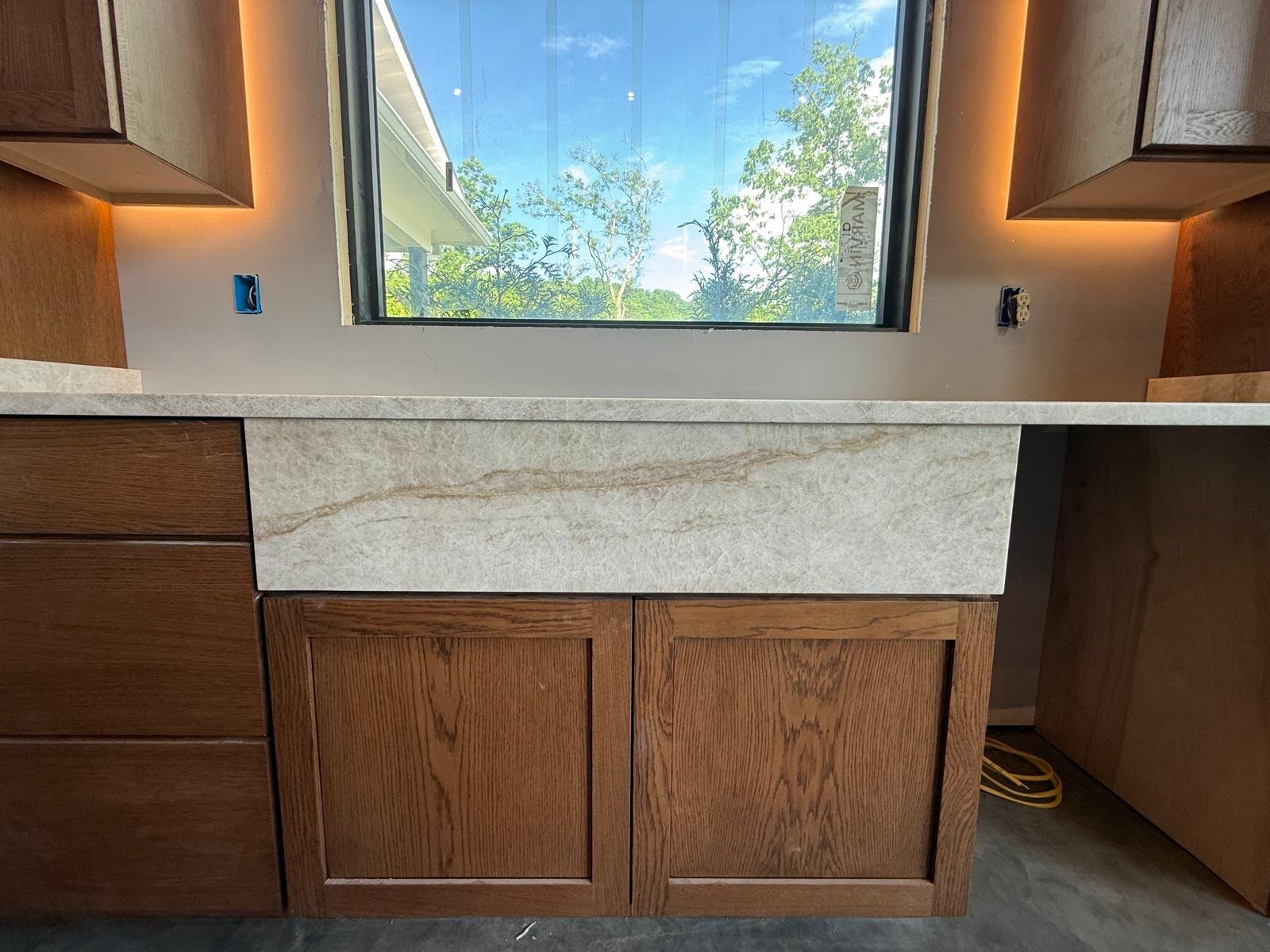
The look is soft and warm. The base is a creamy beige, and gentle gold and gray veins run across the surface. Many people mix up quartzite and quartz, so it helps to know what quartzite is before you shop. Taj Mahal is part of the wider quartzite countertops family, and its color pairs well with both wood and painted cabinets.
Why Does Taj Mahal Quartzite Work for Kitchens?
This stone handles daily kitchen use better than most natural stones. It resists heat, so a warm pot won’t leave a mark the way it can on some surfaces. Still, a trivet is smart for very hot pans. If heat is a top worry for you, compare it with other heat-resistant countertops before you decide.
It also resists scratches and chips. Homeowners tend to report fewer problems with this stone than with softer options like marble. In fact, quartzite is often the natural stone with the fewest complaints. That makes Taj Mahal Quartzite a solid choice for families who cook, host, and use their kitchen every day.
What Cabinets Go With Taj Mahal?
The warm cream base is easy to match. With natural wood cabinets, the gold veins pull out the tones in the grain for a cozy, built-in feel. With white or gray painted cabinets, the same veins add just enough contrast to keep the room from looking flat. Because the color is neutral, it also blends with most floors and wall paint, which gives you room to change other parts of the kitchen later.
What Is a Double Waterfall Island?
A waterfall island is where the stone folds over the edge and runs straight down to the floor. A double waterfall means the stone drops down on both ends of the island. The result is a clean, finished look from every side of the room.
The tricky part is the seams. Our team hand-matches the veins across each cut, so the pattern lines up where two pieces meet. Done right, the seams almost disappear. The waterfall is one of several edge design options you can choose for an island or counter.
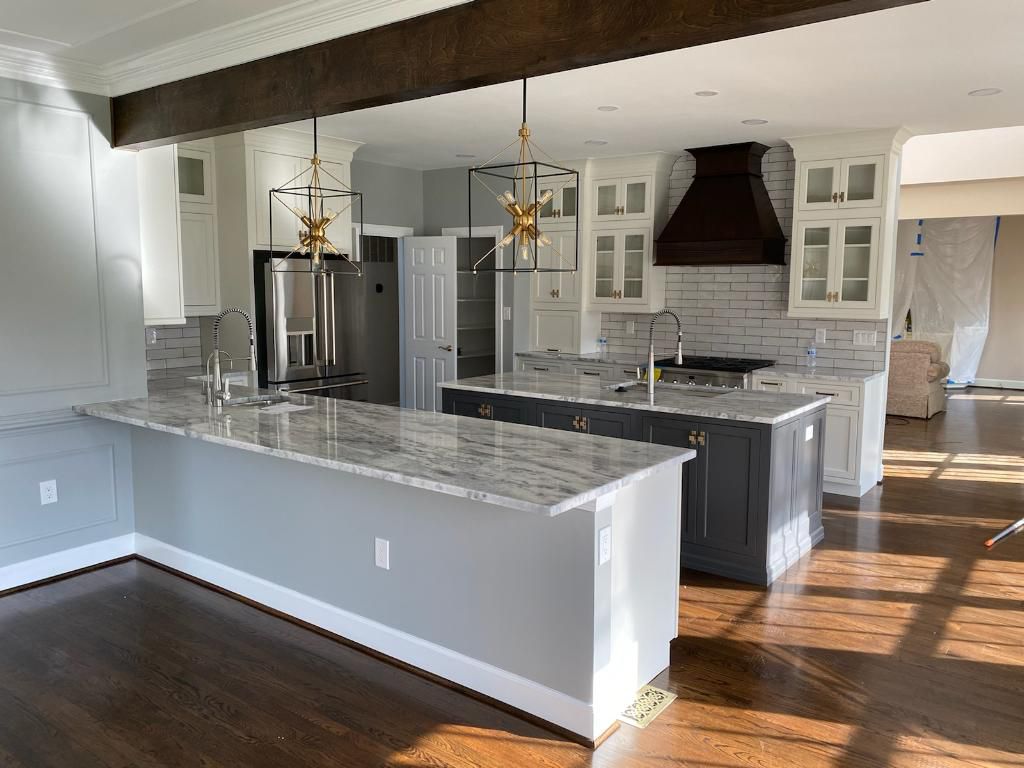
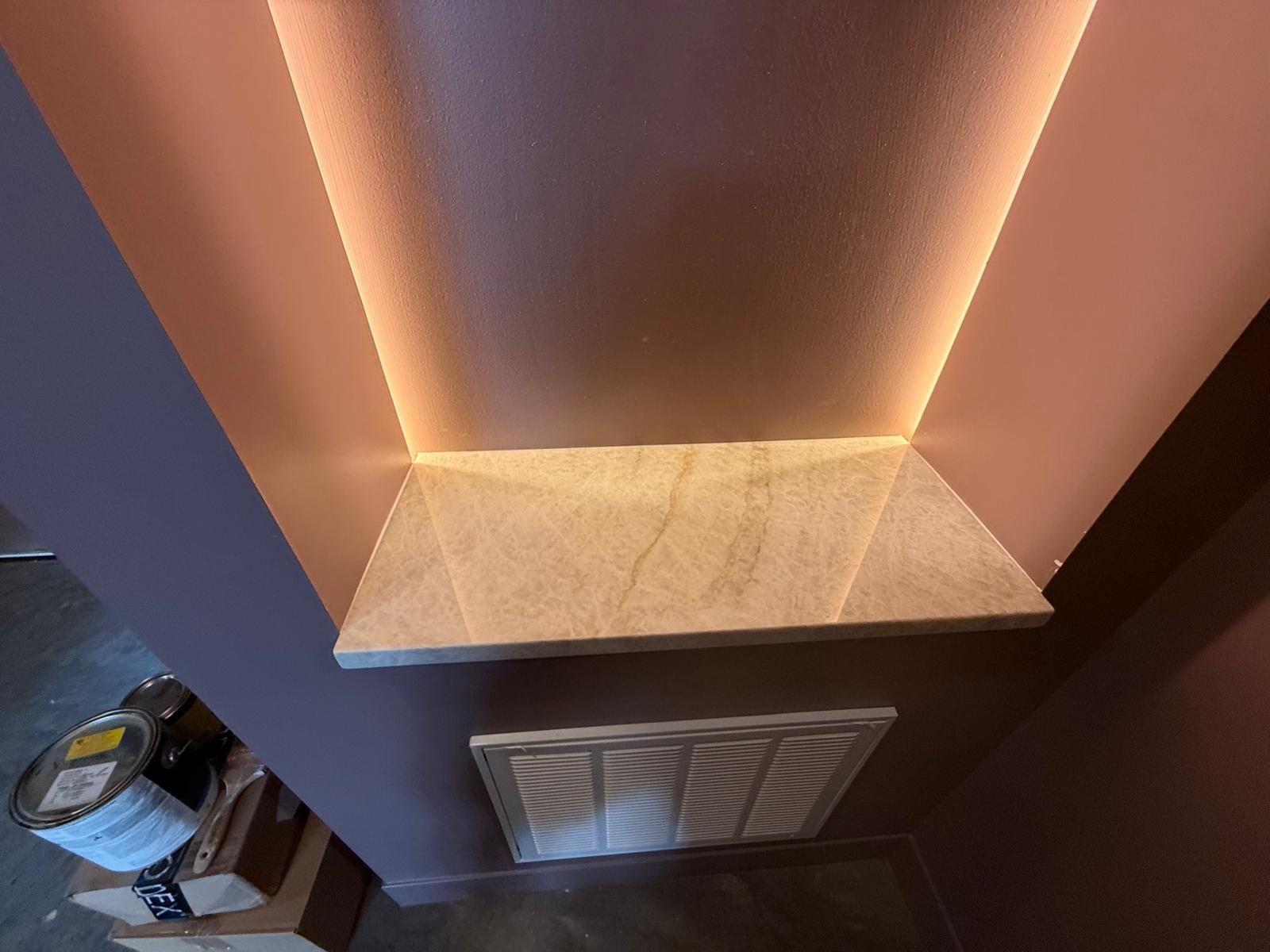
The kitchen we built in Mathias, WV used a Taj Mahal slab with a waterfall on both ends of the island. The warm veins wrap around each corner, and the gold tones tie in nicely with the wood cabinets. We also cut a matching floating shelf from the same stone so the whole space flows together.
How Do You Care for Taj Mahal Quartzite?
Care is simple, but there is one step you should not skip. Unlike quartz, this stone needs sealing. Sealing fills the tiny pores so spills can’t soak in and stain. This surprises some people who expect quartz-style, no-seal care.
Plan to reseal about once a year. For daily cleaning, wipe up spills soon after they happen and use mild soap and water. Skip harsh or acidic cleaners, since those can dull the surface over time. That easy routine keeps the stone looking fresh for years.
Frequently Asked Questions About Taj Mahal Quartzite
Is Taj Mahal Quartzite expensive?
It sits at the higher end for natural stone, often more than granite or standard quartz. Price depends on slab size, thickness, and edge work like a waterfall. A waterfall island uses more stone, so it costs more than a flat edge.
Does Taj Mahal Quartzite stain?
Sealed quartzite resists most everyday stains from wine, coffee, and oil. The key word is sealed. If the surface is not sealed, liquids can soak in. Wipe spills soon and keep up with yearly sealing to stay protected.
How often should you seal this quartzite?
Once a year works for most kitchens. Heavy-use kitchens may want it a bit sooner. A quick test: drip a little water on the stone. If it soaks in and darkens, it’s time to reseal.
Is quartzite better than quartz?
Neither is better across the board. Quartz is man-made and never needs sealing. Quartzite is natural, handles heat better, and gives you one-of-a-kind veining. It is a strong pick if you want a real stone look with good durability.
Where can I see Taj Mahal Quartzite slabs near me?
You can view full slabs in person at our countertops showroom in Martinsburg, WV. Seeing the real veins helps you pick the slab you like most, since no two pieces look the same.
Ready to bring warm, natural stone into your kitchen? Get a free quote and our team in Virginia and West Virginia will help you plan the right countertop for your space.