Quick Takeaways
- Quartz handles warm dishes fine but can scorch or crack under a pan straight off the burner
- The resin binder in quartz starts to discolor around 300°F. A cast iron skillet leaves the stove at 400°F or more
- Granite and quartzite take direct heat far better because they contain no resin
- A trivet or folded towel is the whole solution. Heat marks on quartz cannot be polished out
Are quartz countertops heat resistant? Yes, to a point. Quartz shrugs off a warm plate or a coffee mug without a mark. A pan that just left a gas burner is a different story. This guide explains what actually happens, where the limit sits, and how homeowners in VA, WV, MD, and DC keep quartz looking new.
Are Quartz Countertops Heat Resistant Enough for Hot Pans?
Not for pans straight off the stove. Quartz is about 90 percent ground stone and 10 percent polymer resin. The stone part is fine with heat. The resin is not. Around 300°F, resin can yellow, cloud, or crack. A skillet can sit at 400°F to 500°F when you lift it off the flame.
That is why manufacturers of engineered stone list heat damage as an exclusion in most warranties. The surface did not fail. It was used outside its rating.
Every brand sets its own number, and most land between 150°F and 300°F for safe contact. That range covers a warm plate but not a stockpot. The gap between the two is where most damage happens, because the pan looks harmless once it leaves the flame.
Warm items are a different case. A dinner plate from the microwave, a hot mug, or a baking sheet that has cooled for a minute will not harm quartz.
What Does Heat Damage on Quartz Look Like?
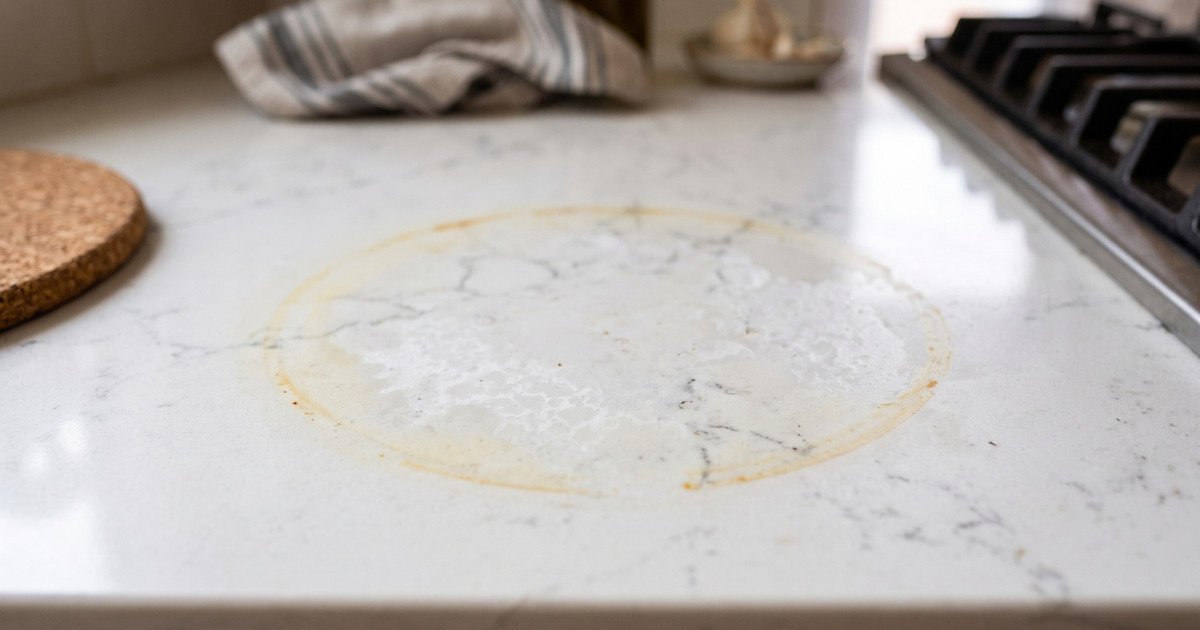
- A dull ring or cloudy patch. The most common result. The resin has softened and re-set with a different sheen.
- Yellow or brown discoloration. Shows most on white and light gray quartz.
- A crack radiating from one spot. Called thermal shock. It happens when one small area expands fast while the surrounding stone stays cool.
Rings and discoloration sit inside the resin, so they cannot be buffed out like a scratch on granite. Small cracks can sometimes be filled, and our countertop repair guide explains when that works. Large heat marks usually mean replacing that section.
How Does Quartz Compare With Granite and Quartzite for Heat?
Granite and quartzite are 100 percent natural stone with no resin. Both were formed under extreme heat, so a hot pan is a minor event for them. Granite can take direct contact with cookware without marking. Quartzite behaves the same way and adds better scratch resistance.
The trade-off is sealing. Both natural stones need sealer every one to three years. Quartz never does. If you cook with cast iron daily and want to skip the trivet, granite or quartzite countertops fit that habit better. Our roundup of heat resistant countertops ranks all the common materials side by side.
How Do You Protect Quartz From Heat?
Three habits solve the problem for good:
- Keep a trivet next to the stove. A cork, silicone, or wood trivet takes two seconds to grab. Many Sterling VA homeowners cut a small granite remnant as a permanent landing pad beside the cooktop.
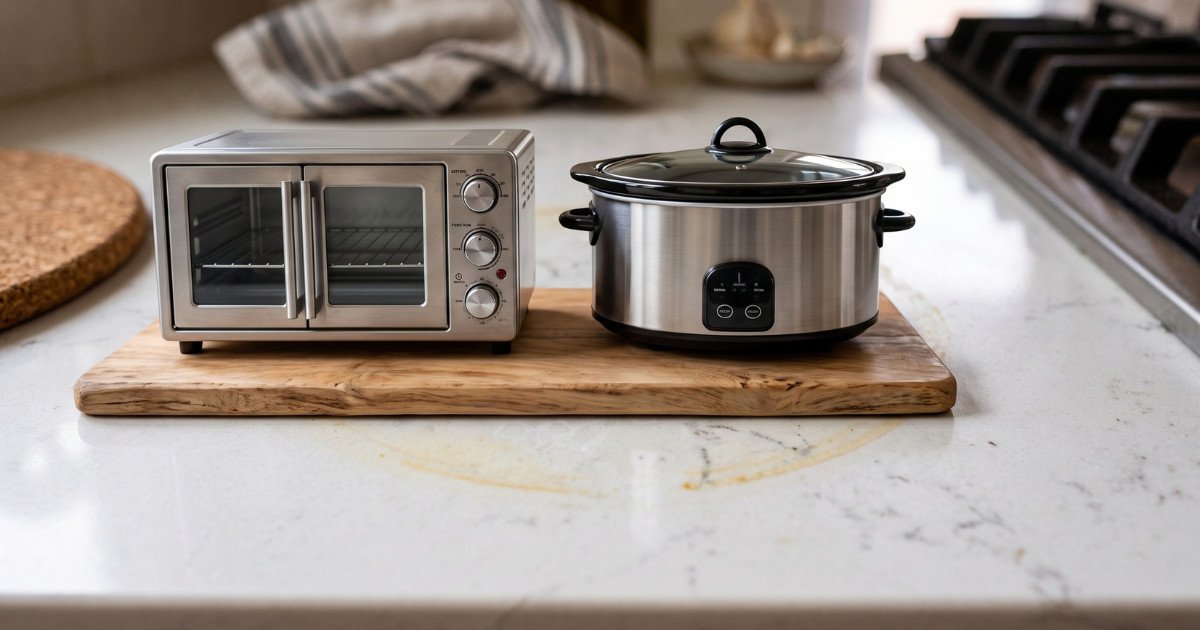
- Do not set slow cookers, air fryers, or toaster ovens directly on the surface. These appliances radiate heat downward for hours. Put a board or mat under them.
- Cool baking sheets on the stovetop grates first. Thirty seconds is enough to drop below the danger zone.
Curling irons and hair straighteners cause the same damage on quartz bathroom vanities, so a heat mat belongs there too. The same goes for candles in glass jars, which heat the base far more than people expect. If you are still comparing materials, the quartz countertops for kitchen page lists the colors and brands we carry, and both our Sterling VA shop and Martinsburg WV showroom keep samples you can take home.
Frequently Asked Questions About Quartz and Heat
Can I put a hot pan on quartz for just a few seconds?
A few seconds with a moderately warm pan is usually fine. A skillet straight off high heat can mark the surface almost instantly. Use a trivet every time so you never have to guess.
Which quartz colors show heat marks the most?
White, cream, and light gray show yellowing and cloudy rings most clearly. Darker and heavily patterned quartz hides minor marks better, though the damage is still there.
Can heat marks on quartz be repaired?
Rarely. Discoloration is inside the resin, so polishing does not reach it. A small crack can sometimes be filled and color-matched. A large mark usually means replacing that piece of the countertop.
Is quartzite the same as quartz for heat?
No. Quartzite is natural stone with no resin and handles direct heat like granite. Quartz is engineered with resin. The similar names cause a lot of confusion at the showroom.
Does the heat limit affect a warranty claim?
Yes. Nearly every quartz brand excludes heat damage from coverage. Keep your trivet habit and the warranty stays intact for scratches, chips, and manufacturing defects.
Not sure whether quartz or natural stone fits how you cook? Get a free quote and we will show you both under real kitchen conditions at either location.