Quick Takeaways
- A countertop fabricator cuts, polishes, and installs your stone. A middleman only sells it.
- Ask to see the shop, the slab, and a written quote with every line item before you sign
- Templating in person, seam placement, and support brackets separate good work from bad
- Local shops in Sterling VA and Martinsburg WV let you check all of this in one visit
Choosing a countertop fabricator is the one decision that shapes everything else in your kitchen project. The stone can be great, but a poor cut, a bad seam, or a rushed install shows up every day for the next 20 years. These seven questions help homeowners in VA, WV, MD, and DC sort the real shops from the resellers.
What Does a Countertop Fabricator Actually Do?
A fabricator takes a raw slab and turns it into your finished countertop. That means templating your cabinets, cutting the stone, polishing edges, cutting sink and cooktop openings, and installing the pieces. Some companies only sell stone and hand the work to a subcontractor. Others, like our kitchen countertop fabrication shop in Sterling VA, do every step in house.
Why does that matter? When one company owns the whole process, there is one phone number when something needs attention. When three companies split the job, each one points at the other.
Which 7 Questions Should You Ask Before You Sign?
- Can I see your shop and my actual slab? A real countertop fabricator will show you the cutting floor and let you pick the slab that ends up in your kitchen. Photos of “similar” stone are a warning sign.
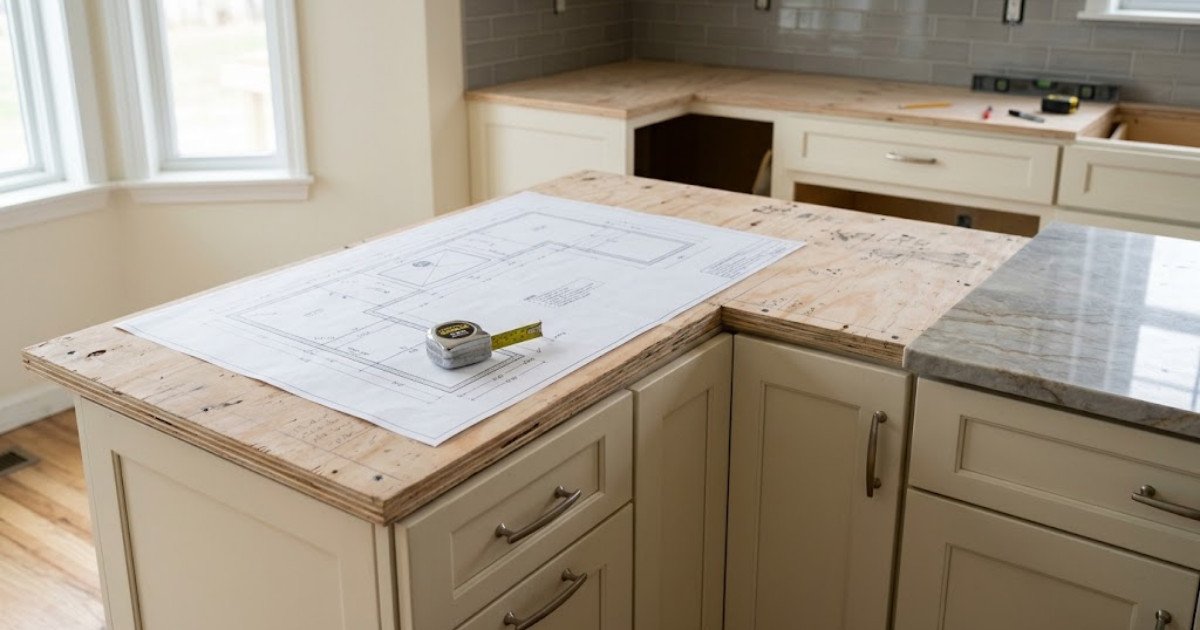
- Who does the templating, and how? Digital or physical templates made on site after cabinets are set. Measuring from a drawing leads to gaps.
- Where will the seams go? Ask for a layout before cutting. Good shops place seams away from the sink and cooktop and match pattern flow across the joint.
- What is included in the price? Cutting, edge profile, sink cutout, faucet holes, removal of old tops, and installation should each appear in writing. Learn more about edge profile options so you know what you are choosing.
- How do you support overhangs? Anything past 10 inches needs brackets or corbels. If the answer is “it will be fine,” keep looking.
- What happens if a piece cracks during install? Ask who pays and how fast a replacement is cut. In-house shops can recut in days.
- Can I talk to recent customers? Reviews are useful, but customer testimonials tied to real projects tell you more.
How Do You Spot a Weak Quote?
Homeowners in Fairfax, Ashburn, and Frederick MD tell us the same story: three quotes, three totally different numbers, and no way to compare them. That usually means the quotes list different things.
To collect quotes you can actually compare, start with this independent directory of countertop fabricators in Virginia and West Virginia and ask each shop the same seven questions.
A solid quote shows square footage, stone price per square foot, edge profile, number of cutouts, and install cost as separate lines. If a quote shows one number and the words “all in,” ask what “all” covers. Removal of old countertops and plumbing disconnects are the two items most often left out. Knowing how to measure countertops yourself lets you sanity-check the square footage on every quote.
Why Does a Local Shop Beat a Big Box Store?
Big box stores sell countertops but do not cut them. Your job goes to whichever subcontractor is available that week. You never meet the person cutting your stone, and lead times often run five to eight weeks.
A local shop that fabricates its own work can usually template, cut, and install in one to two weeks. You see the slab, meet the team, and get one point of contact. The Natural Stone Institute publishes fabrication standards, and shops that follow them will say so when you ask.
Our Sterling VA facility handles fabrication for Northern Virginia and the DC area, and the Martinsburg WV showroom serves the Eastern Panhandle, Hagerstown MD, and Winchester VA. Browse finished work in our Virginia project gallery to see seams, edges, and layouts up close.

Frequently Asked Questions About Choosing a Countertop Fabricator
What is the difference between a fabricator and an installer?
A fabricator cuts and shapes the stone. An installer sets it in your kitchen. Many shops do both, which keeps one team responsible from template to final polish.
How long should the whole process take?
From slab selection to install, two to three weeks is typical for a local shop. Templating happens after cabinets are level and set. Cutting takes a few days, and install is usually one day.
Should I pick the stone before or after choosing a fabricator?
Choose the shop first. A good countertop fabricator will guide you to stone that fits your budget, your cabinets, and how you cook. Buying stone elsewhere and bringing it in limits your options and can void warranties.
Is a deposit normal?
Yes. Most shops ask for 50 percent at signing and the balance after install. Be cautious if a company asks for full payment before templating.
Do you fabricate countertops for Maryland and DC homes?
Yes. Our Sterling VA shop serves Northern Virginia, Montgomery County MD, and Washington DC. The Martinsburg WV showroom covers the Eastern Panhandle and western Maryland.
Bring these seven questions to every shop you visit. If you want to start with ours, get a free quote and we will walk you through the slab, the layout, and the numbers in one sitting.