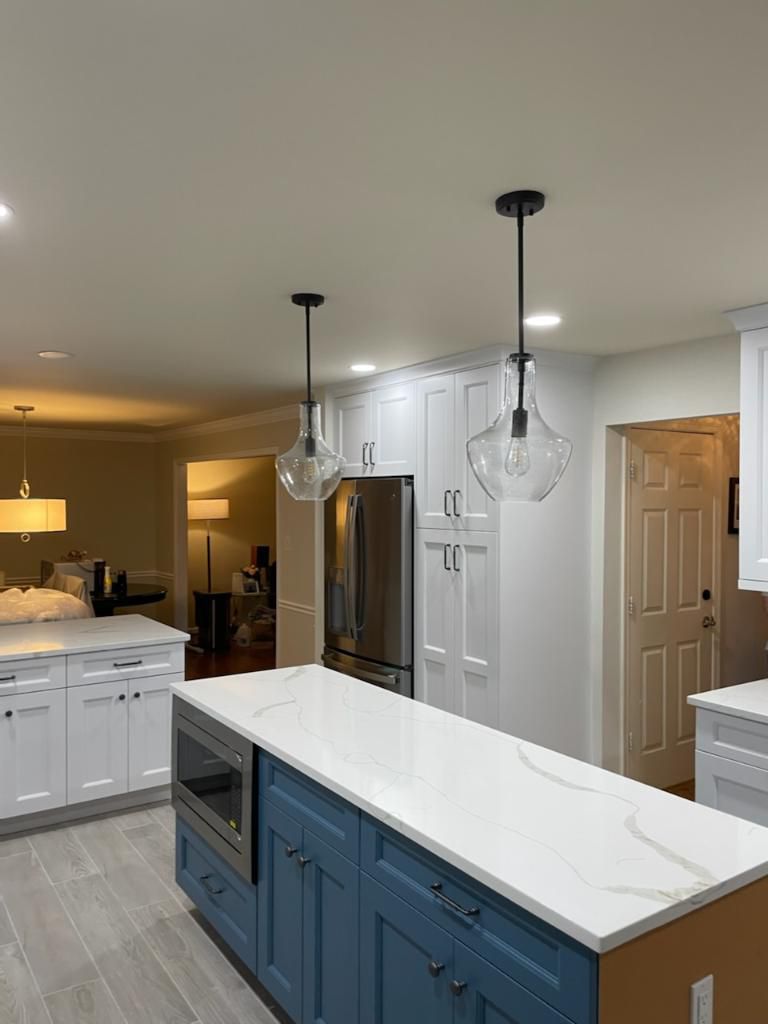
- Daily cleaning: warm water, a drop of dish soap, and a soft cloth. That is the whole routine
- Never use bleach, oven cleaner, abrasive pads, or anything with a pH above 10. These dull the resin
- Dried food and grease lift with a plastic scraper or a glass cleaner, not a scouring pad
- Quartz never needs sealing, waxing, or polishing products
How to clean quartz countertops is simpler than most product labels make it sound. Quartz is non-porous, so nothing soaks in, and there is no sealer to protect. The only real rule is avoiding harsh chemicals that attack the resin binder. Here is the daily routine, the fixes for tough spots, and the products to keep away from your kitchen in VA, WV, MD, or DC.
How Do You Clean Quartz Countertops Every Day?
Three things: warm water, a small amount of mild dish soap, and a soft cloth or sponge. Wipe, rinse with clean water, and dry with a microfiber towel to avoid streaks. That handles crumbs, coffee rings, fingerprints, and most spills.
For a quick wipe between meals, a spray bottle of water with a drop of dish soap works. Some homeowners keep a bottle of plain glass cleaner for the same job. Both are safe on quartz.
Skip the daily “stone cleaner” sprays unless you like the scent. Quartz does not need them. Those products were made for granite and marble, which have pores to protect. If you have both materials at home, the sealing routine in our post on whether granite stains applies only to the natural stone.
What Should You Never Use on Quartz?
Quartz is about 90 percent ground stone and 10 percent resin. The stone part does not care what you use. The resin does. Keep these off the surface:
- Bleach and products that contain it. Repeated use dulls the finish and can lighten dark colors.
- Oven cleaner, drain cleaner, and degreasers with a high pH. These are the fastest way to etch the resin.
- Abrasive pads and powder cleansers. Scotch-Brite and scouring powders leave fine scratches that collect dirt.
- Nail polish remover, paint thinner, and other solvents. Wipe up fast if one spills. Short contact is usually fine, but do not let it sit.
- Permanent markers. Not a cleaner, but worth knowing. Rubbing alcohol on a cloth usually lifts them.
Heat is the other enemy. Cleaning will not fix a scorch ring, because the damage sits inside the resin. Our post on quartz heat resistance covers the trivet habit that prevents it.
How to Clean Quartz Countertops When Spots Will Not Wipe Off?
Dried food and sticky residue. Lay a warm damp cloth on the spot for a few minutes to soften it, then push it off with a plastic putty knife or an old credit card. Metal scrapers can scratch.
Grease around the cooktop. Glass cleaner or a 50/50 mix of water and rubbing alcohol cuts it without harming the surface. Wipe, rinse, dry.
Hard water spots near the faucet. A cloth dampened with white vinegar, held on the spot for a minute, then rinsed. Do not leave vinegar sitting on quartz for long stretches.
Tomato sauce, wine, or turmeric that sat overnight. Baking soda mixed with water into a paste, rubbed gently with a soft cloth, then rinsed. Quartz is engineered stone, so the color is in the resin, not on top. True stains are rare. What looks like a stain is almost always residue sitting on the surface.
Haze or dull patches. Usually leftover soap film. Wipe with a water and rubbing alcohol mix and buff dry.
Does Cleaning Differ Between Quartz Brands?
Not much. Ask any brand how to clean quartz countertops and you get the same answer. Cambria, Caesarstone, Silestone, and MSI Q Quartz all publish nearly identical care sheets: mild soap, soft cloth, no bleach, no abrasives, no high-pH cleaners. Matte and honed finishes show fingerprints and oil more than polished, so they need a bit more frequent wiping, but the products are the same.
White quartz shows everything, which is why it feels harder to keep clean. It is not. It just reveals the crumbs that a gray or patterned top hides. Homeowners in Sterling VA and Martinsburg WV who picked white Calacatta-look quartz tell us a quick nightly wipe is all it takes. If you want the lowest-effort option, our roundup of low maintenance countertops compares quartz with the other choices.
For brand-specific details, the quartz countertops for kitchen page lists the lines we carry in Northern Virginia, the Eastern Panhandle, and Maryland.
Frequently Asked Questions About Cleaning Quartz Countertops
Can I use Clorox wipes on quartz?
Occasionally, yes. Daily, no. Most disinfecting wipes contain bleach or quaternary compounds that dull the resin over time. For germs, a 70 percent rubbing alcohol spray is safer and works just as well.
Can I use vinegar on quartz countertops?
Briefly, for hard water spots, then rinse. Vinegar is mildly acidic and will not harm quartz in short contact. Do not use it as a daily cleaner or let it pool.
Do quartz countertops need to be sealed?
No. Quartz is non-porous. Sealer has nothing to soak into and will leave a film on the surface. Only granite, marble, and quartzite need sealing.
Why does my white quartz look yellow near the window?
Some older quartz resins yellow slowly in direct sunlight. It is not dirt and cleaning will not remove it. Newer formulations resist this better. A window film or shade slows it down.
Do you repair quartz that was damaged by a cleaner?
Light dulling can sometimes be polished out by a fabricator. Deep etching from oven cleaner usually cannot. Send us a photo and we will tell you which case you have.
Now you know how to clean quartz countertops without guessing. Thinking about quartz for a kitchen that gets heavy use? Get a free quote and we will show you how each finish holds up to daily cleaning at either showroom.